Fade
Clipper Cut Family
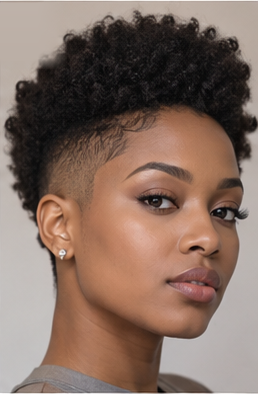
Illustration -- About our illustrations
A fade is a clipper cut in which the hair on the sides and back is graduated from longer to very short, blending smoothly towards the skin. Where the blend starts gives the low, mid and high fade; how short it finishes gives the bald or skin fade.
Distinguishing characteristics
The defining feature is a seamless gradient around the sides and back. Placement (low, mid, high) and finish (bald/skin) combine, for example a low bald fade. A burst fade curves around the ear, and a drop fade dips lower behind the ear. A taper is a more limited version focused at the sideburns and neckline.
Advantages
Clean, sharp and adaptable to any length or texture on top.
Considerations
Needs frequent barber visits to stay crisp.
Warning signs
Razor bumps, ingrown hairs or irritation after cuts; ask your barber to avoid shaving against the grain.
Preparation
Bring a photo and say where you want the fade to start, how short it should finish and how much length to keep on top.
Daily Care
Brush or pick the top and moisturise it; keep the faded areas clean.
Night Care
A durag or satin cap keeps the top neat, especially with waves.
Washing
Wash as you normally would; short hair dries quickly.
Scalp Care
Skin fades expose the scalp: moisturise, use sunscreen, and watch for razor bumps after a close cut.
Refreshing
Fades grow out fast; most people refresh them every one to three weeks.
Styling tips
Pair it with waves, twists, a curly top, locs or a high-top. A line-up sharpens the edges.
At a glance
- Looks
- 7 looks
Looks
- Low Fade
- Mid Fade
- High Fade
- Bald (Skin) Fade
- Burst Fade
- Drop Fade
- Fade with Hair Design
FAQs
- What is the difference between a fade and a taper?
A fade carries a seamless gradient around the whole sides and back. A taper limits the short blend to the edges, at the temples, sideburns and neckline.
- How often does a fade need a touch-up?
Fades grow out fast. Most people refresh them every one to three weeks to keep the blend crisp.