Bantu Knot-Outs
Set & Release Family
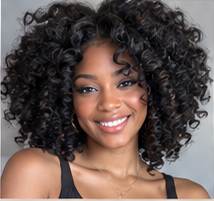
Illustration -- About our illustrations
Bantu Knot-Outs are the loose curls revealed after a set of Bantu knots is carefully unwound. The finished look is worn out rather than as standing knots, offering a temporary change in curl definition without requiring a chemical texture change.
Distinguishing characteristics
Sections are coiled into small buns, allowed to set and then released. The curl comes from that knot set, distinguishing a knot-out from a braid-out or a two-strand twist worn intact. Air-drying is an option; use of a dryer means the service should not be described as entirely heat-free.
Advantages
Creates a loose curled look using the wearer's hair and can be changed at the next wash. Knot placement gives room to plan a different part and silhouette.
Considerations
Setting and drying require time. Humidity, sleep and handling can soften definition; the result is not a permanent curl treatment or a guaranteed replica of a reference image.
Warning signs
Undo knots that hurt or sting rather than waiting for them to loosen. Persistent irritation, broken hairs or thinning need assessment.
Preparation
Decide on the final part and desired separation before setting. Cleanse and condition as needed, detangle gently and allow enough time for the sections to dry. Confirm that any setting product is compatible with the hair and scalp.
Daily Care
Separate curls gently rather than repeatedly brushing for a perfectly uniform finish. Keep hands out of the set when possible and accept gradual softening as part of wearing a temporary style.
Night Care
Use loose protection that does not flatten the curls or pull at the hairline. Re-forming a few sections is optional; painful overnight knots are not necessary to keep the look.
Washing
Washing resets this temporary curl pattern. Choose cleansing based on scalp needs, then decide whether to create a new set instead of trying to preserve the original indefinitely.
Scalp Care
Apply styling product to the hair as directed and avoid heavy accumulation at the bases. Check comfort while knots are still formed.
Refreshing
Reshape selected curls with an agreed setting method rather than repeatedly adding strong-hold product. Let sections set fully before separating again.
Removal
Unwind gently, then detangle with an appropriate conditioning routine before the next wash or style. Do not pull through knots created by repeated separation.
Styling tips
Decide whether you prefer more visible individual curls or a softer, fuller finish before separating the released sections. Release the set only when it is ready, then separate gently rather than repeatedly brushing for extra volume. Treat the knot-out as the finished loose style; standing knots are a different look.
At a glance
- Estimated price
- $65–$125
Planning estimate, not a validated market benchmark -- local salon pricing varies and this figure should not be treated as a typical or standard price. - Chair time
- 1–3 hrs
- Sizes
- Medium, Small, Large
- Lengths
- Shoulder Length
- Looks
- 4 looks
Looks
- Medium Shoulder-Length Bantu Knot-Outs -- Medium, Shoulder Length, Natural Black
- Small Bantu Knot-Outs -- Small, Shoulder Length, Natural Black
- Large Bantu Knot-Outs -- Large, Shoulder Length, Natural Black
- Dark Brown Bantu Knot-Outs -- Medium, Shoulder Length, Dark Brown
Price & time
- Estimated price: $65–$125
- Estimated time: 1–3 hrs
- Confidence: Low
Planning estimate, not a validated market benchmark -- local salon pricing varies and this figure should not be treated as a typical or standard price.
US national estimate; conflated with underlying Bantu Knots pricing in sources.
Culture & history
Bantu Knot-Outs: A Heat-Free Curl Set Rooted in Bantu Knot Tradition
A Bantu knot-out releases hair from set Bantu Knots to reveal a defined, heat-free wave or curl pattern -- the same coiled, wrapped-around-itself construction that gives Bantu Knots their symbolic history among Zulu (Nguni) and other Bantu-speaking peoples, but styled as the "after" look rather than worn as knots. It is technically distinct from Twist-Outs and Braid-Outs already in this catalog: knot-outs are set from coiled, self-wrapped sections, not flat/rope twists or braided sections, which produces a visibly different curl pattern once released.
FAQs
- Is a Bantu knot-out the same as wearing Bantu knots?
No. A knot-out is the loose curl finish after the set knots are released. Tell the stylist which of these two finishes you want so the booking includes the appropriate setting and release time.
- Is a knot-out always heat-free?
It can be air-dried, but a service that uses a dryer includes heat. Ask about the drying plan instead of assuming the hairstyle's name guarantees a heat-free appointment.
Related styles
- Bantu Knots -- A Bantu Knot-Out is the styled result of installing Bantu Knots, then unraveling them to leave a defined curl pattern -- a process/lineage relationship, not a construction hierarchy. Compare